Surprise Guest Lecturers Help Center
The course will feature surprise guest lectures by some leading researchers in Computational Neuroscience -- stay tuned for announcements and watch this space for their bios!
Guest lectures will be announced via email and the videos will be posted on the regular Video Lectures page.

Fred Rieke
Fred Rieke is a native of Boston, Massachusetts. He was a physics undergraduate and graduate student at the University of California, Berkeley. His graduate work with Bill Bialek focused on theoretical studies of how signals are encoded in the nervous system. After graduating in 1991, he went to the University of Chicago as a postdoctoral fellow with Eric Schwartz working in the mechanisms regulating synaptic communication between cells in the retina. He did a second postdoctoral fellowship at Stanford University with Denis Baylor, working on how light is transduced into an electrical signal by photoreceptors in the retina. He joined the Department of Physiology and Biophysics at UW in 1997. Work in the Rieke lab concerns how rod and cone photoreceptor transduce light inputs and how the resulting signals are processed by the neural circuitry in the retina. Current work is focused on three issues: how the rods generate reliable and reproducible responses to single absorbed photons, how the retinal readout of the rod responses supports vision in starlight, the origin and functional impact of noise in cone photoreceptors, and how signals from different parallel readouts of the rod and cone signals interact.
View Fred's guest lecture for the course here.
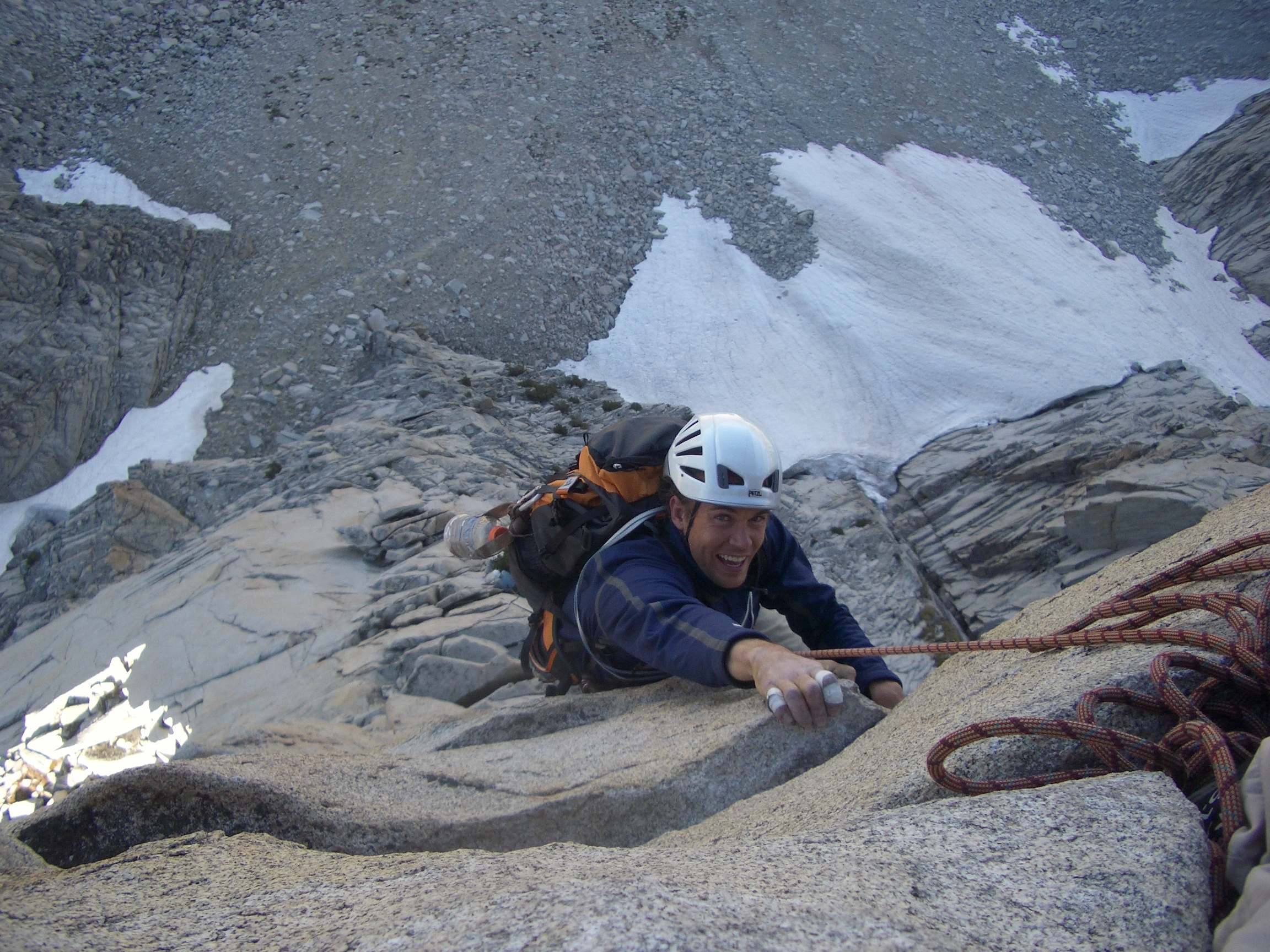
Eric Shea-Brown
Eric Shea-Brown earned his PhD from Princeton in the Program in Applied and Computational Mathematics in 2004, working on the neurodynamics of cognitive function with Phil Holmes and Jonathan Cohen. His postdoctoral years were spent at NYU under the mentorship of John Rinzel. Eric is the recipient of a Burroughs-Wellcome Careers at the Scientific Interface award and an NSF CAREER award. His work aims to connect basic models of neural dynamics and coding function. Current projects focus on optimal decision making in simple neural networks, population coding and spike train correlations, and the consequences of chaotic dynamics in neural circuits.
View Eric's guest lecture for the course here.

Eberhard Fetz
Eb Fetz received
his PhD in physics from the Massachusetts Institute of Technology
in 1967. Since then, he has been a professor in the Physiology and Biophysics
Department at the University of Washington. Eb has made seminal contributions
to our understanding of how the brain controls movements. His approach
has ranged from recording single neurons in the motor cortex and spinal
cord of behaving monkeys to using computational models such as recurrent
neural networks to understand the neural mechanisms of movement. Eb is
also a pioneer in the field of brain-computer interfacing, demonstrating
as early as in the 1960s that monkeys can directly control objects by voluntarily
modulating their neural activity. His most recent work has focused
on implantable bidirectional brain-computer interfaces.
View Eb's guest lecture for the course here.
Last Modified Fri 19 Jun 2015 8:53 AM CEST